


Openwater Hospitality

Ordinance guide

West Michigan Short-Term Rental Ordinances: The 2026 City-by-City Guide

Short-term rental rules on the lakeshore are set at the city, village, and township level, and they change more often than the listing sites admit. This is what each municipality actually says, and what it means if you're buying. We verify every one of these before our clients write an offer.

Last verified: July 202615 municipalities, South Haven to Ludington, plus Grand Rapids

At a glance

Fifteen municipalities, four kinds of rulebook.

Sort by town, status, or tax rate. Every town name links to its full breakdown below.

Short-term rental ordinance comparison for 15 West Michigan municipalities: investor-friendliness, whole-home rules, caps, annual costs, and lodging taxes
Whole-home allowedCapAnnual cost
DouglasAllegan Co.OpenYesNone~$125/yr ($375 per 3-year certificate)6%
FennvilleAllegan Co.OpenYes, with special land use approval5% in R-1, 10% in R-2 (ADUs exempt)~$25 registration + $75 inspection6%
Grand HavenOttawa Co.RestrictedCertified properties in limited districtsNo numeric cap; zoning keeps ~350 certified$525 initial + $165/unit annual renewal6%
Grand RapidsKent Co.RestrictedNo, owner-occupied only200 owner-occupied licenses citywide$634 initial, $229 renewal~14%
HollandOttawa & Allegan Co.Capped / waitlistOwner-occupied OK; investor licenses capped~25 investor licenses; reportedly full~$85/yr (first unit)6%
LudingtonMason Co.Capped / waitlistYes, with a city licenseHard citywide cap (originally 30 licenses)$500 application + $1,500 per 3-year license6%
MontagueMuskegon Co.OpenYes120 rented days/yr per STR$50 per building, valid 2 years11%
MuskegonMuskegon Co.OpenYesZone 1 full (waitlist); Zones 2-11 open; no cap downtown$500 to $2,000/yr by property type11%
Norton ShoresMuskegon Co.No ordinanceYes (no STR ordinance)NoneGeneral rental registration only11%
PentwaterOceana Co.Capped / waitlistYes, with a village licenseCouncil may cap by resolution$750/yr renewal6%
SaugatuckAllegan Co.Capped / waitlistYes20% cap in six R-1 districts; most full$540/yr + $175 reinspection if failed6%
Silver Lake / MearsOceana Co.OpenYesNoneSet annually by township board6%
South HavenVan Buren & Allegan Co.Capped / waitlistYes, licensed~1 in 4 dwellings citywide (~20%)Varies by license class6%
Spring Lake VillageOttawa Co.RestrictedOverlay district only, with approvalMapped STR Overlay District (shrunk once already)$500/yr + $1,000 min. application escrow6%
WhitehallMuskegon Co.No ordinanceYes (no STR ordinance yet)None yet; ordinance in draft as of Sept 2025Council-set fee11%

Lodging tax is Michigan's 6% use tax plus the county accommodations tax where one exists (5% in Muskegon County, 8% in Kent County). Airbnb collects and remits the state 6% on platform bookings. Fees and caps reflect what each municipality published or confirmed as of July 2026.

Town by town

What the rules actually say.

Ordered along the shoreline, south to north, with Grand Rapids last because it's the question everyone asks.

Illustration of South Haven's red pierhead lighthouse and pier at sunset
South Haven, Michigan

Region

Van Buren & Allegan counties

Permit status

Capped / waitlist

South Haven, MI Short-Term Rental Rules

South Haven is the southern anchor of the lakeshore market, and one of the strongest. Short-term rentals are legal here, including whole-home rentals, but every one of them needs a city license, and the city caps the total at roughly one in four dwellings, about 20% citywide.

License fees vary by class, so the annual cost depends on how your property is categorized. The bigger question is availability. With a cap in place, a desirable area can be full, and a property you buy today may wait in line before it can legally host.

Our takeA great market with a real gate. Never write an offer in South Haven assuming the license comes with the house. Confirm with the city first.

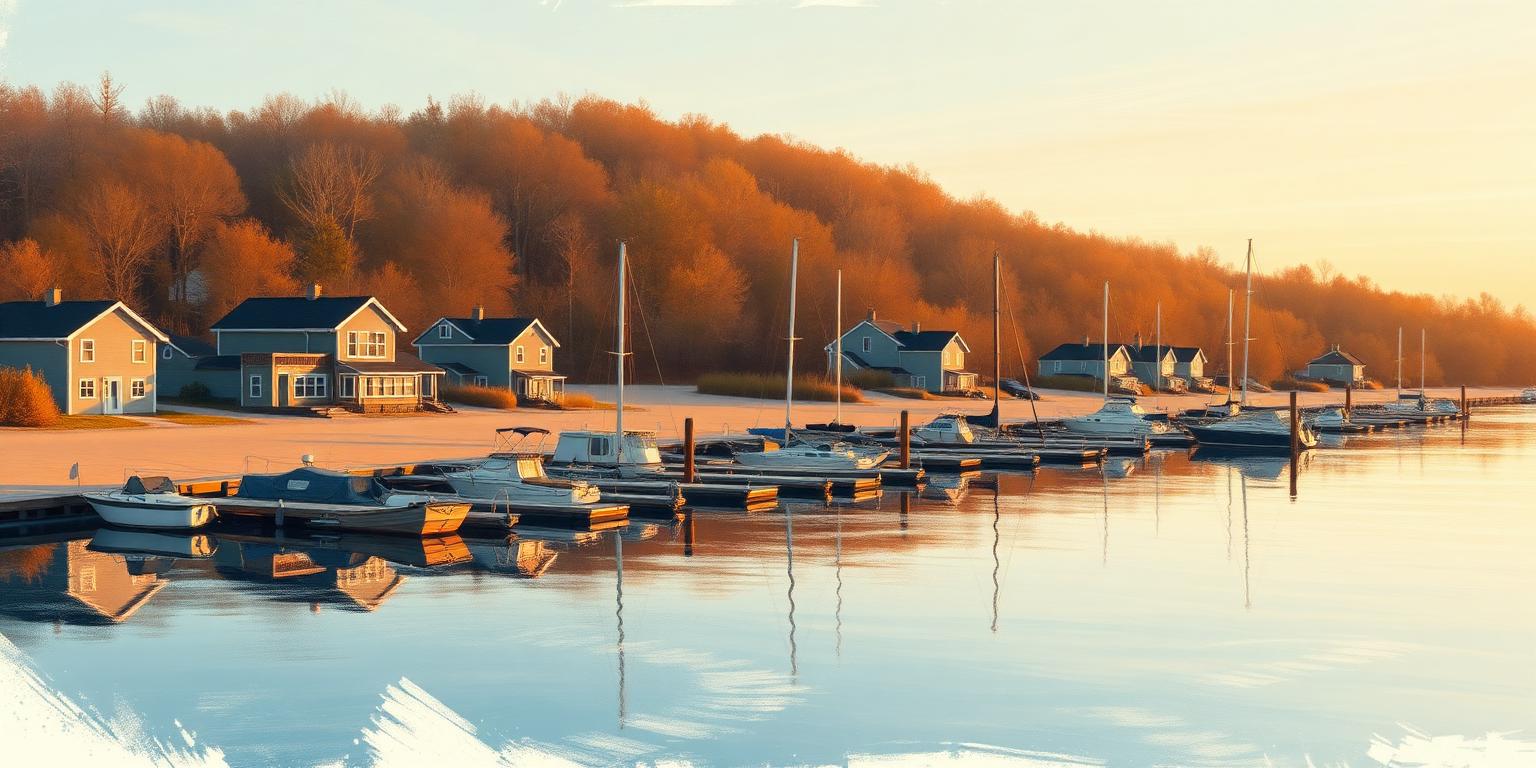
Illustration of sailboats moored in Saugatuck's harbor with golden dunes behind
Saugatuck, Michigan

Region

Allegan County

Permit status

Capped / waitlist

Saugatuck, MI Short-Term Rental Rules

Saugatuck allows whole-home short-term rentals, but it governs them by percentage. In the city's six R-1 residential districts, STRs are limited to 20% of dwellings, and most of those districts are already over the cap. In practice, that means a waitlist.

Outside the R-1 districts there is no cap. The license runs $540 a year, plus a $175 reinspection fee if the property fails an inspection. Lodging tax is the state's 6%.

Our takeIn Saugatuck the zoning district matters more than the zip code. We pull the district map before we pull comps.

Illustration of a quiet Douglas harbor at golden hour, with sailboats and waterfront cottages
Douglas, Michigan

Region

Allegan County

Permit status

Open

Douglas, MI Short-Term Rental Rules

Across the water from Saugatuck sits the most straightforward rulebook on the lakeshore. Douglas has no caps and no waitlist. The city issues a three-year certificate for $375, which works out to about $125 a year.

Whole-home rentals are allowed, and the lodging tax is simply the 6% state use tax. For buyers priced out of Saugatuck, Douglas often delivers the same guest demand with a fraction of the regulatory friction.

Our takeClear, cheap, and stable. Douglas is the first place we look when a client wants Saugatuck demand without Saugatuck's cap.

Illustration of rolling orchard and vineyard hills outside Fennville, with the lake beyond
Fennville, Michigan

Region

Allegan County

Permit status

Open

Fennville, MI Short-Term Rental Rules

Fennville is open to investors, with guardrails. Short-term rentals need special land use approval in the R-1, R-2, B-1, and CBD districts, and the city caps density: 5% in R-1, 10% in R-2. Accessory dwelling units are exempt from both caps.

Costs are the lowest on this list: a registration fee around $25 plus a $75 inspection. Lodging tax is the 6% state use tax.

Our takeA genuine value play, but the approval step adds time to a purchase timeline. Start it early, ideally before closing.

Illustration of Holland's Big Red lighthouse above dunes and rows of orange tulips on the Lake Michigan shore
Holland, Michigan

Region

Ottawa & Allegan counties

Permit status

Capped / waitlist

Holland, MI Short-Term Rental Rules

Holland draws a hard line between living in your rental and investing in one. Owner-occupied short-term rentals are allowed. Non-owner-occupied, whole-home investor STRs are capped at roughly 25 licenses across the city's low- and medium-density residential zones, and those licenses are reportedly full, with a waitlist.

If you do secure one, the cost is modest: about $85 a year for the first unit. Lodging tax is the state's 6%.

Our takeA strong market behind a mostly closed door. We treat Holland investor licenses as unavailable until the city tells us otherwise in writing.

Illustration of the Grand Haven boardwalk and pier leading to the red lighthouse
Grand Haven, Michigan

Region

Ottawa County

Permit status

Restricted

Grand Haven, MI Short-Term Rental Rules

Grand Haven doesn't use a numeric cap. Instead, whole-home short-term rentals are limited to certified properties in limited districts. The practical effect is the same as a cap: roughly 350 certified STRs exist, and zoning keeps that number constrained.

Costs sit at the higher end: $525 initially, plus a $165 per-unit renewal each year. Lodging tax is 6%.

Our takeThe word certified does all the work in this ordinance. Buy a property that's already certified, or underwrite the deal as if you can't STR it.

Illustration of calm water, wooden docks, and a red rowboat on Spring Lake
Spring Lake Village, Michigan

Region

Ottawa County

Permit status

Restricted

Spring Lake Village, MI Short-Term Rental Rules

Spring Lake is one of the most restrictive municipalities on the shoreline. Short-term rentals are allowed only inside the village's mapped STR Overlay District, and only with special land use approval. The overlay has been shrunk before, which matters: a property that qualifies today is not guaranteed to qualify forever.

The village charges $500 a year, and applying requires a minimum $1,000 escrow. Lodging tax is 6%.

Our takeWe approach Spring Lake carefully. If a client's heart is set on it, we confirm the overlay map and the property's status with the village before the offer, not after.

Illustration of dune grass above a quiet Lake Michigan beach in Norton Shores
Norton Shores, Michigan

Region

Muskegon County

Permit status

No ordinance

Norton Shores, MI Short-Term Rental Rules

Norton Shores has no short-term rental ordinance yet. There is no STR license, no cap, and no day limit. The city's general rental registration applies, and that's the whole requirement today.

Budget for the county tax, though: Muskegon County adds a 5% accommodations tax on top of the state's 6%, so lodging taxes here total 11%.

Our takeNo ordinance is not the same as no rules forever. We underwrite Norton Shores deals assuming an ordinance arrives eventually, and we favor houses that still work if it does.

Illustration of Muskegon's red-and-white pierhead lighthouse on its curving breakwater
Muskegon, Michigan

Region

Muskegon County

Permit status

Open

Muskegon, MI Short-Term Rental Rules

The City of Muskegon is open to investors and allows whole-home short-term rentals, organized by zone. Zone 1, the beach area, is full and running a waitlist. Zones 2 through 11 are open, and the downtown DDA and BID districts have no cap at all.

Annual fees run $500 to $2,000 depending on property type, among the highest on the lakeshore. Lodging tax totals 11% with the Muskegon County add-on.

Our takeThis is where we see the value market heading. The fees are real, but so is the availability, and entry prices still leave room for the numbers to work.

Illustration of the White River Light Station and keeper's houses on the channel near Whitehall
Whitehall, Michigan

Region

Muskegon County

Permit status

No ordinance

Whitehall, MI Short-Term Rental Rules

Whitehall has no short-term rental ordinance today, but one was in draft as of September 2025. Until it passes, the city's general rental ordinance applies, with a council-set fee.

Lodging taxes total 11% here: the state's 6% plus Muskegon County's 5%.

Our takeBuy in Whitehall with your eyes open. A draft ordinance means the rules could change after you close, so the details of that draft belong in your decision.

Illustration of Montague's giant weathervane tower on the White Lake shore, with sailboats
Montague, Michigan

Region

Muskegon County

Permit status

Open

Montague, MI Short-Term Rental Rules

Montague doesn't cap the number of short-term rentals. It caps the calendar instead. Each registered STR can rent up to 120 days per year.

Registration costs $50 per building and stays valid for two years. Lodging tax is 11% with the county add-on.

Our takeThe 120-day cap changes the math, not the viability. A well-booked summer fits inside it. We model Montague revenue around the cap from day one.

Illustration of the Silver Lake sand dunes sweeping down to the Lake Michigan shoreline
Silver Lake & Mears, Michigan

Region

Oceana County

Permit status

Open

Silver Lake & Mears, MI Short-Term Rental Rules

Silver Lake, home to the dunes and some of the strongest summer rental demand in Michigan, is genuinely open to investors. The township allows short-term rentals township-wide for single- and two-family homes, with no cap and no owner-occupancy requirement.

The fee is set annually by the township board. Lodging tax is the 6% state use tax.

Our takeIf you want the classic Michigan summer rental, weekly bookings and repeat families at peak rates, this is the most welcoming rulebook on the shoreline.

Illustration of a dune-grass path opening onto the Lake Michigan beach at Pentwater
Pentwater, Michigan

Region

Oceana County

Permit status

Capped / waitlist

Pentwater, MI Short-Term Rental Rules

Pentwater requires an annual village license for short-term rentals, and the village council can impose a cap by resolution. Because a resolution can change without a full ordinance amendment, the current status is something to confirm directly with the village before you buy.

The renewal runs $750 a year, the highest recurring fee on this list. Lodging tax is 6%.

Our takeWe like Pentwater as a market and respect the uncertainty. A call to the village clerk is part of every Pentwater deal we evaluate.

Illustration of Ludington's lighthouse and the car ferry on Lake Michigan
Ludington, Michigan

Region

Mason County

Permit status

Capped / waitlist

Ludington, MI Short-Term Rental Rules

Ludington runs the tightest numeric cap on the lakeshore: a hard citywide limit, originally 30 licenses, and they're rarely available. Whole-home rentals are legal if you hold one of those licenses, and effectively closed if you don't.

The costs match the scarcity: a $500 application fee, $1,500 per three-year license, and $100 per-unit inspections. Lodging tax is 6%.

Our takeA wonderful market to already be in, and a hard one to break into. When a property surfaces with a path to a license, it's worth moving fast, after we verify the details with the city.

Region

Kent County

Permit status

Restricted

Grand Rapids, MI Short-Term Rental Rules

Grand Rapids isn't a lakeshore town, and we include it because it's the most searched market in West Michigan and the one buyers ask us about most. The short answer: the city does not allow non-owner-occupied short-term rentals. There is no license pathway for a whole-home investor STR in Grand Rapids.

What exists is an owner-occupied license: 200 of them citywide, at $634 initially and $229 at renewal, for hosts who live in the home. Lodging taxes run about 14%, the state's 6% plus Kent County's 8%.

It's also why we don't operate there. We're a lakeshore company, and this is the boundary of the map.

Our takeIf the plan is a whole-home Airbnb in Grand Rapids, the ordinance says no. The legal whole-home inventory is on the lakeshore, and it's what the towns above are for.

FAQ

Questions investors actually ask.

Not the way most investors mean it. Grand Rapids only licenses owner-occupied short-term rentals: you have to live in the home, and the city caps those licenses at 200. There is no license pathway for a non-owner-occupied, whole-home STR in the city. If you want a whole-home rental in West Michigan, the lakeshore towns above are where it's legal, and each one has its own rulebook.

As of July 2026: Douglas has no caps and a simple three-year certificate. The Silver Lake and Mears area allows STRs township-wide with no cap and no owner-occupancy requirement. Muskegon is open in Zones 2 through 11, with no cap in the downtown districts. Norton Shores and Whitehall have no STR ordinance yet at all. Montague skips license caps but limits each rental to 120 booked days a year.

In most lakeshore municipalities, yes. Holland, Saugatuck, South Haven, Grand Haven, Spring Lake, Pentwater, and Ludington all require a license or certificate, and several cap how many exist. Douglas and Fennville require approval without hard caps. Norton Shores and Whitehall only require general rental registration today. The license question comes before the revenue question: no license, no income.

Every Michigan short-term rental owes the state's 6% use tax, and Airbnb collects and remits it automatically on platform bookings. Some counties add their own: Muskegon County adds 5%, bringing the total to 11% in Muskegon, Norton Shores, Whitehall, and Montague, and Kent County adds 8%, about 14% in Grand Rapids. County-level taxes and filings are on you to understand; we walk every owner through what applies to their address.

Often, and quietly. Rules are set at the city, village, and township level, not by the county or the state, and a single council vote can change a cap or shrink an overlay district. Spring Lake's overlay has already been reduced once, and Whitehall had an ordinance in draft as of September 2025. Treat any guide, including this one, as a snapshot, and verify with the municipality before you make an offer.

You own a house, not a license. In capped towns like Holland, Saugatuck's R-1 districts, and Ludington, a waitlist can mean months or years before you can legally rent short-term, with no guarantee you ever do. We advise clients to underwrite those purchases as if the STR license doesn't exist: if the deal only works with short-term income, it isn't a deal yet.

Ordinances change, sometimes mid-season. Everything on this page reflects what we verified with municipal sources in July 2026, and it starts drifting out of date the moment a council votes. Before you buy or apply, confirm the current rules directly with the city, village, or township. Nothing here is legal advice. It's homework, done in public.

Ordinance research by Jamie McCauley, Five Star Real Estate.

Free estimate

Checked the rules? Now check the numbers.

Our free estimator models the revenue, nightly rate, and occupancy for your address from live lakeshore comps.

See what your place could earn

We run this check on every property before our clients write an offer.

Buying on the lakeshore? Book a free call. We'll pull the current ordinance, the waitlist status, and the revenue comps for the exact address you're considering, and we'll tell you if the answer is don't.

Book a free 20-minute call